
Senate President, Bukola Saraki meets top comedian, Basketmouth.

Nigerian And World News, Articles, Reviews On Celebrities, Politics, Sports, Entertainment, Finance, Technology and a Lot More!


President Muhammadu Buhari has identified sabotage and theft of gas as factors undermining the efforts of the government to increase power supply in the country. To tackle the problem, the President announced that existing Military Task-Forces will be reorganized to ensure a successful protection of the network of gas pipelines.The President, who said this Tuesday in a question-and-answer interaction with the Nigerian community in Tehran, the Islamic Republic of Iran, noted that "although some improvement in power had been recorded in the recent period," sabotage of pipeline installations continued to be a problem. He told his audience that Nigeria had everything it takes to generate enough power. "Power is a running battle because the saboteurs are still there. We have the potential. We have gas, we have qualified people but we are contending with a lot of saboteurs who go and blow up installations. When gas is pumped to Egbin and such other power stations, thieves and saboteurs such as the militants cut those supplies," President Buhari said.







"Let me start with the Federal Government-owned media organizations, the NTA, FRCN and NAN. Why have you all chosen to play second fiddle in the country's media landscape? I ask because the NTA and FRCN of yesterday is not the same as what we have today. Whereas most broadcast journalists of note in our country today passed through the NTA and the FRCN, there is no denying the fact that the private radio and TV stations are doing much better, at least going by the fact that most Nigerians prefer them to the public broadcasters. Indeed, most Nigerians find the private broadcasters more credible. The reason for this is not farfetched. First, the public broadcasters have thrown professionalism to the wind while also showing total disregard for editorial independence. They have mortgaged their credibility on the altar of political correctness. Yet, these Federal Government-owned media establishments are endowed with highly-trained and well-qualified personnel, better infrastructure and a wide reach. It is interesting to note that these government-owned media organizations complain of financial woes, forgetting that there is a link between credibility and profitability.
Advertisers will surely flock to more credible media organizations, and of course it is also true that content drives advertisement. The same law of diminishing returns also apply to NAN, which was once the leading national news agency in the whole of Africa, boasting of the best professionals in the news business. Today, the agency is punching far below its weight, despite its presence in all the states of the Federation. We intend to provide leadership for the Federal Government-owned media organizations in a manner that will make them to become the first source of information, so that they can more effectively function as a vehicle for the change mantra of the Buhari Administration, and also regain their lost glory. The combined reach of the NTA, FRCN and NAN, if effectively utilized, will facilitate the success of the change campaign.
But they must first enhance their own credibility, because no credibility-deficient news organization can successfully propagate the message of change. At this juncture, ladies and gentlemen, let me assure Nigerians that under this Administration, no Federal Government-owned media organization will deny the opposition the opportunity to air their views. It is true that while we were in opposition, we were treated as outcasts by these public broadcasters. They denied us the use of their platforms, they rejected our adverts and even made themselves available for the most abhorrent hate campaign ever in the history of electioneering campaign in our country. But in an era of change, which is our mantra, that cannot and will not continue. Opposition members are Nigerians, just like members of the ruling party. Even the ruling party will benefit when the opposition is allowed to air their views freely, because you learn more from people who disagree with you. Therefore, let the ruling party and the opposition air their ideas and let the people, who wield the ultimate power, decide at the end of the day"he said.


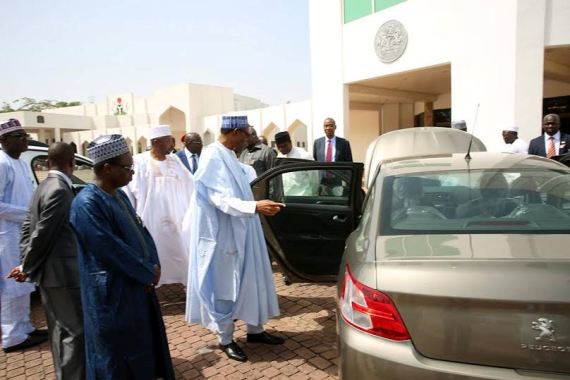
President Muhammadu Buhari Thursday in Abuja reaffirmed his Administration's commitment to the Federal Government's privatisation and commercialisation policy. Speaking at an audience with Peugeot's Executive Vice President for Africa and the Middle-East, Mr. Jean-Christophe Quemard, President Buhari stressed, however, that greater consideration will now be given to the technical and managerial competence of prospective buyers of government-owned companies.
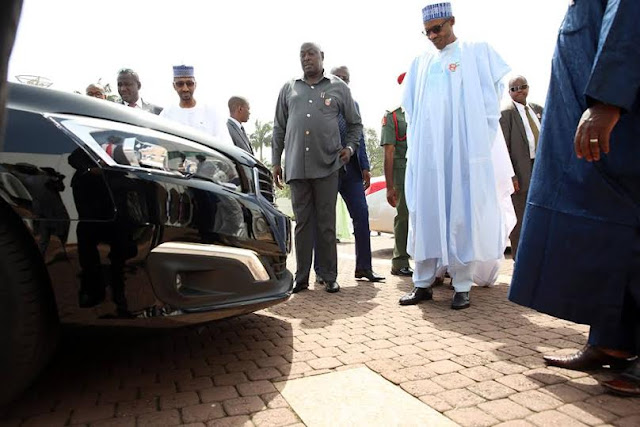

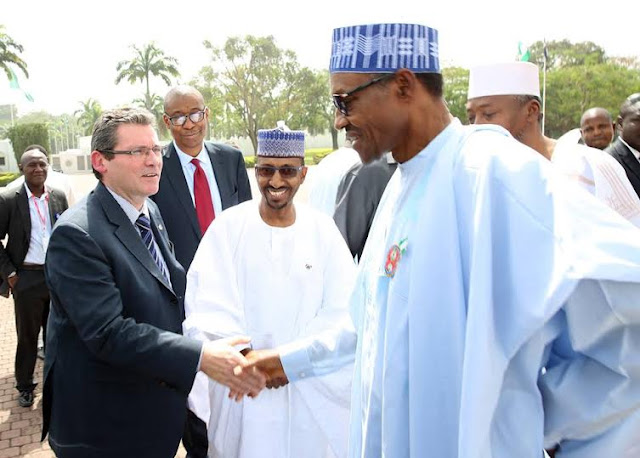
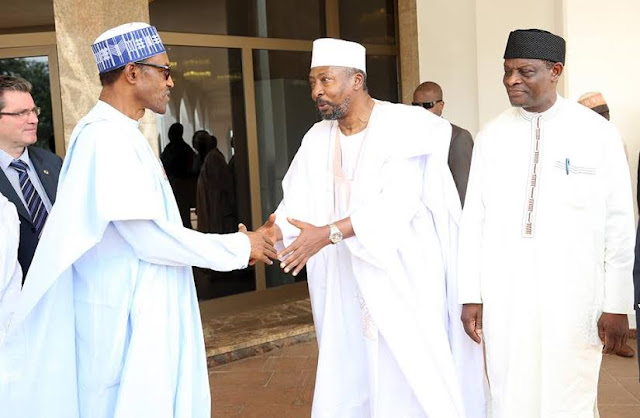
The President said that a higher premium will be placed on the technical competence and financial clout of bidders in future privatisation exercises to avoid the running aground of privatized companies by ill-equipped and incapable investors. President Buhari who spoke after being briefed on plans by Peugeot to stage a comeback to Nigeria after the collapse of the privatization of Peugeot Automobiles Nigeria Limited, noted that privatization could only succeed and yield desired benefits if buyers of government-owned companies possess essential skills and resources. Mr. Quemard assured President Buhari that Peugeot was ready to reinvest in vehicle assembly in Nigeria, provided that the right indigenous partners are found.
The Peugeot Chief Executive for Africa and the Middle-East briefed the President on the company's three-phased plan to resume vehicle assembly in Nigeria with 4,000 cars next year, rising up to 10,000 cars by 2021. He said that the plan, which he urged the Federal Government to support with appropriate policies and actions, will entail higher local content in the assembly of Peugeot cars in Nigeria and the exportation of locally assembled Peugeot cars from Nigeria to neighbouring African countries. Peugeot Automobiles Nigeria Limited which was privatized some years ago has technically reverted to government ownership with up to 85 per cent of its shares now held by the Federal Government and the Assets Management Corporation of Nigeria (AMCON).
Garba Shehu SSA to the President (Media & Publicity) November 19, 2015.


